
Private label wudu basin sourcing is most effective when a bathroom brand or retailer defines a clear customer promise and then builds a controlled product system around it. Begin with the customer use case and channel, choose a product architecture that can be repeated, and agree what is genuinely customized: finish, configuration, packaging, instructions, accessories, or a complete new design. Require an approved drawing and sample, a normalized commercial quote, documented inspections, and a change-control process before launch. Verify every technical detail, certification, dimension, price, lead time, and warranty directly; do not treat a supplier listing as evidence.
The direct answer: private label works when the product, brand system, and supply controls are designed together

Why private label is more than putting a logo on a carton
A logo is only the visible layer of private label. The real work is aligning the product experience with your brand, your sales channel, and your service obligations. A bathroom brand may need a coordinated family of finishes and installation messages. A supermarket may need scannable labels, shelf-ready cartons, clear returns information, and replenishment discipline. An online seller may need dimensional photography, accurate package measurements, and packaging strong enough to survive parcel handling.
Define the promise in customer language: simple daily washing, a compact solution for a small space, a coordinated commercial washroom range, or an accessible product for a particular project type. Then identify the proof points needed to support that promise. If a claim depends on a performance test, a material property, a hygiene statement, or a regulatory requirement, ask a qualified party to establish and document it. Marketing copy must follow verified evidence, not the other way around.
Choose the right level of customization
| Private-label level | Typical buyer need | Main control point |
| Branding only | Fast launch using an existing product | Correct artwork, label, carton, and approved sample |
| Configured range | Different options for channels or projects | Component list, option codes, and stock planning |
| Surface or color program | Visual differentiation | Finish reference, variation tolerance, and approval lighting |
| Co-developed design | Distinctive user experience | Drawing ownership, tooling, testing, and revision control |
| New product development | Long-term category platform | Stage gates, budget, validation, and launch responsibility |
Do not pay for customization merely because it sounds exclusive. A change is valuable when it improves customer understanding, installation, durability, handling, or margin. It also adds risk. Custom colors may create minimums and inventory exposure; new tooling may affect the schedule; custom packaging may require language and legal review. Put the business reason beside every requested change and ask the manufacturer to identify its operational consequences.
1. Build a private-label product brief
The brief should be short enough to use in a meeting and detailed enough to prevent ambiguity. State the intended customer, channel, launch geography, sales forecast range, target retail position, desired product family, and what is explicitly out of scope. Include a visual direction, but distinguish inspiration from a binding technical requirement. Add a preliminary installation context, cleaning expectations, packaging constraints, and the information your customer must receive at the point of sale.
Create a requirements register with an owner and status: proposed, confirmed, sample-approved, or deferred. Include product, packaging, branding, documentation, logistics, and service. This makes decisions visible to marketing, purchasing, quality, warehouse, and customer service. It also protects the project from silent additions that appear late as rushed artwork or a surprise component cost.
Information to confirm before design work
Which countries and channels will sell the product, and what local labeling or documentation rules apply?
What customer installation assumptions can be stated, and what must be reviewed by a qualified installer?
What package dimensions, carton weight, barcode format, language, and pallet constraints does each channel require?
Which claims are desired, and what evidence would be needed before publishing them?
What is the replacement, spare-part, and complaint path after a customer receives the product?
Which brand assets may the manufacturer use, and how will confidential artwork be controlled?
2. Select a supplier that can support your brand system
A private-label partner must handle both manufacturing and controlled communication. Ask potential suppliers to distinguish standard capacity from development capacity. Request examples of how they manage drawings, artwork, bill-of-material revisions, packaging approvals, and component substitutions. Confirm whether the person quoting is also accountable for production coordination. If several parties are involved, map the responsibility for quality, export documentation, and customer complaints.
Use a written questionnaire and give shortlisted suppliers identical information. Ask for an itemized quotation, not a single headline price. It should identify product configuration, packaging, sample and tooling charges, minimum order, currency, Incoterm, quote validity, estimated production time, payment terms, inspection assumptions, and exclusions. Ask the supplier to mark estimates clearly. Never fill missing fields with assumptions, especially for warranty, certification, test performance, or local compliance.
If doooway is being considered, invite it to respond to the same private-label brief and evidence checklist as other candidates. The useful comparison is not how attractive the catalog is; it is how clearly the supplier translates your brand requirements into an approved, repeatable product and a manageable order process.

3. Design the physical and verbal customer experience
Private label succeeds when the product and its instructions tell the same story. A basin may look refined in a studio photograph but confuse a customer if the package omits installation context or the online listing uses unverified claims. Plan product photography, line drawings, carton panels, instruction sheets, website copy, and customer-service scripts as one information system. Use the same product name, option code, dimensions, and component terminology everywhere after approval.
Prepare a content matrix with four columns: statement, evidence source, approval owner, and publication status. Statements such as material, finish, compatibility, cleaning guidance, country of origin, or included components should have a traceable source. If a detail is not confirmed, write “to be verified” internally rather than allowing a creative team to guess. This discipline prevents costly edits and misleading listings.
Packaging is part of the brand
The carton is often the first physical touchpoint and the last protection against damage. Define the hierarchy of information: product name, key use, configuration, included items, handling, installation warning, care guidance, responsible party, barcode, and required legal information. Keep the design readable at shelf distance and on a warehouse label. Ask for a physical or realistic packaging sample and inspect it in the lighting and handling conditions your channel uses.
4. Sample, approve, and lock the reference configuration
A private-label approval should cover more than color. Inspect the basin, components, finish, drain path, mounting or placement assumptions, carton, inserts, instructions, and label artwork. Compare the physical sample to the drawing and to your customer promise. Have operations test unpacking, warehouse handling, and item identification. Have customer service review whether a buyer could understand what is included and what requires professional installation.
Issue one consolidated approval record with a revision number, photographs, marked drawing, bill of materials, artwork files, and open actions. Identify the retained master sample and define who may release production. The purchase order should reference the approved revision. If the supplier suggests a substitution, require written notice and decide whether a new sample or new customer content is needed.
Approval questions for a launch team
Does the sample match the approved appearance under more than one lighting condition?
Are every included component and optional component identified by a stable code?
Can the package be opened, stored, and shipped without avoidable damage or confusion?
Do the instructions match the product that is actually in the carton?
Are all public claims supported by current, applicable evidence?
Can warehouse and customer-service teams identify the revision from the carton and documents?
5. Protect margins with a complete commercial model
Private label can improve differentiation, but it can also trap cash in packaging, tooling, and slow-moving variants. Build a model for the first order, a normal replenishment order, and a downside scenario. Include product cost, artwork and tooling, samples, inspection, packaging, freight, insurance, duty, local delivery, storage, breakage, payment fees, returns, marketplace fees, retail margin, and marketing. Separate one-time costs from recurring costs and record who owns leftover custom packaging.
| Cost or risk | Question for the supplier or team | Action before launch |
| Custom tooling | Is it required, who owns it, and what output does it support? | Document ownership, maintenance, and payment milestones. |
| Packaging minimum | What quantity is economical and what happens to excess cartons? | Plan inventory or use a flexible label system. |
| Variant complexity | Will each finish or configuration have its own MOQ and code? | Limit the opening range and set reorder triggers. |
| Inspection and damage | What inspection scope and transport protection are included? | Budget independent inspection and a damage allowance. |
| Returns and support | Who handles defects, missing parts, and customer questions? | Create a written escalation and remedy process. |
Set a maximum acceptable landed cost and a minimum contribution margin before negotiating. If the economics work only when every order is perfect, the range is not ready. Consider a staged launch: one or two core configurations first, then extensions after sales, returns, and handling data support them.
6. Control quality across production and replenishment
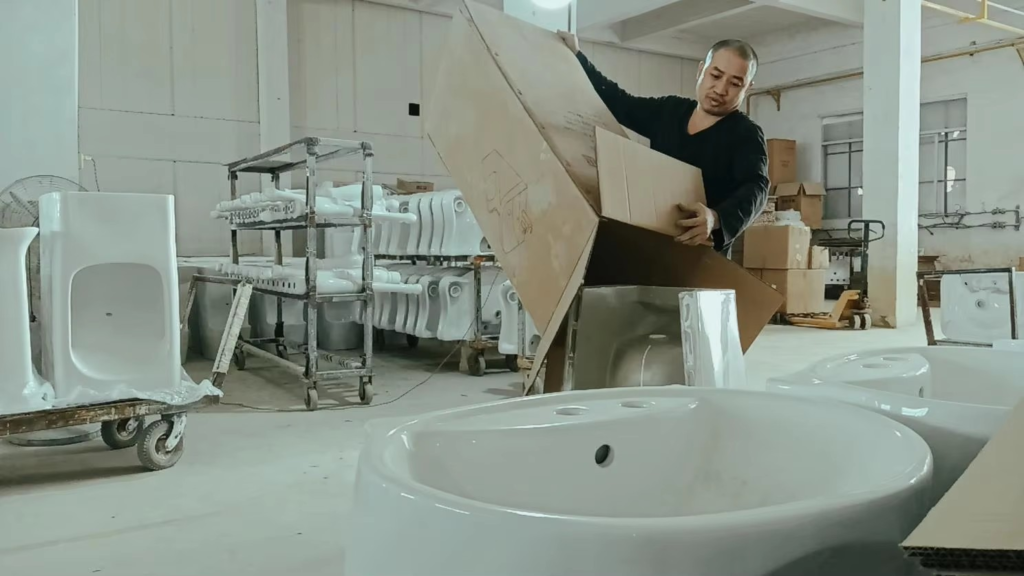
Define a quality plan proportionate to risk. It may include incoming material checks, first-piece approval, in-process observations, final visual and functional checks, carton verification, and pre-shipment inspection. The exact criteria should be written for the approved configuration. A generic factory statement that products are “strictly tested” is not a substitute for an agreed plan or a record of what was checked.
For repeat orders, compare production against the approved master sample and drawing, not against memory. Review defect trends, customer returns, missing components, packaging damage, and delivery variance. Hold a short review after each meaningful shipment. If a recurring issue appears, correct the root cause and update the relevant instruction or inspection point instead of simply accepting replacements.
Manage changes deliberately
Require notice before any change to material source, process, component, finish, packaging, artwork, or subcontractor. Define which changes need a new sample, a technical review, or customer-content updates. Keep a revision log and quarantine stock when the configuration is uncertain. A controlled change may protect supply continuity; an undocumented change can create a mixed range that damages trust and complicates returns.
7. Prepare the retail and digital launch
Create a channel-ready launch kit: approved photography, measured dimensions, package measurements, installation context, care guidance, included-item list, product identifiers, carton labels, and approved claims. For online sales, show the product from useful angles and state limitations clearly. For supermarkets, confirm shelf or pallet presentation, replenishment case quantity, barcode placement, and returns handling. For dealers, provide a concise selling sheet and a technical contact route.
Train the people who will answer questions. They should know what is confirmed, what requires professional review, and how to escalate a complaint. Do not ask a sales associate to improvise a certification claim or a warranty promise. A private-label brand owns the customer relationship even when a factory owns the production line, so service readiness belongs in the sourcing plan.
Frequently Asked Questions
What is the fastest private-label route?
Using an existing, proven configuration with controlled branding and packaging is usually faster than creating a new design. It still requires a sample, drawing, commercial confirmation, packaging review, and a realistic production schedule. Speed should reduce unnecessary development, not remove approval gates.
Can a retailer request a unique color for a small order?
It may be possible, but the supplier must confirm minimum quantity, finish consistency, lead time, sample approval, and leftover inventory risk. Treat a custom color as a commercial and quality decision, not only a design request.
Who should own the artwork?
The contract should state ownership and permitted use. The buyer should control final approval and retain master files, while the manufacturer should use only the released revision. Have legal or brand counsel review sensitive marks and packaging language.
Should private-label products have separate model codes?
Yes, stable codes help purchasing, inventory, customer service, and returns. Codes should distinguish meaningful configuration or packaging differences and should appear consistently on internal records and approved documents.
How do I avoid unsupported marketing claims?
Create a claim register and require evidence before publication. Confirm whether a document applies to the exact product and destination, and ask a qualified adviser when local rules are unclear. Remove claims that cannot be supported.
What should a first private-label order test?
Test product usability, finish consistency, packaging, fulfillment, customer questions, return reasons, and margin. A small controlled launch can expose operational problems before a broad rollout, provided the sample and specification are already approved.
Is a written warranty always required?
Warranty obligations depend on the market, seller, contract, and product. Ask the supplier to state its proposed terms and limitations, then align them with your own sales and consumer-law obligations. Do not advertise a term that has not been verified.
8. Make governance part of the private-label calendar
Set review dates for the product file, artwork, technical documents, claims, packaging, and supplier performance. A private-label range can drift when a sales team changes a description, a factory revises a component, or a market introduces a new labeling requirement. Assign one owner to release each controlled revision and require the release to be visible to purchasing and customer service.
Use a simple launch calendar with gates: brief approved, quotation normalized, sample reviewed, packaging approved, claims verified, order released, inspection completed, goods received, and post-launch review. The calendar helps a retailer or brand owner distinguish a creative deadline from a supply deadline. It also gives the factory a single list of decisions rather than a stream of contradictory requests. Add a short risk review at each gate so an open technical or commercial issue cannot disappear simply because the calendar moved forward.
Plan a measured range extension
When the core item proves itself, extend the range using evidence from customer questions and lost sales. A new option should solve a documented need or improve the economics of the family. Reuse verified content and components only after confirming compatibility. Run the same approval and margin checks for the extension; familiarity with the first model is not evidence that a second model carries no risk.
Conclusion: make the private label repeatable
A strong private-label wudu basin program is a repeatable system: a clear customer promise, a controlled configuration, an honest cost model, approved packaging, documented quality checks, and a responsible service path. Compare doooway or any other supplier by evidence and execution, not by a logo or a headline quote. When marketing, purchasing, operations, and quality approve the same version of the product, your brand can grow the range without losing customer trust.